Showing posts with label Social Observations. Show all posts

Saturday, 17 December 2011

Japan, Nagano and Honourable Mother in Law

Compensation is a very strange idea when you get to think about it. Essentially it is about an idea of one thing which gets replaced by something else and thereby satisfies a sense of loss. For example, my house burns down and the whole of my extensive collection of 20th century antique toothpicks, some hardly used, are destroyed. After a certain amount of strife and argument with the insurance company, who fail to understand the value to history of my collection, I am given a lump of cash, not a big lump, more of a bump actually, but it is my compensation for my loss. The toothpicks were my idea of an important historic collection and they were replaced by an electronic transfer to my bank account and thereby one idea is replaced by something else and I am compensated. Hmmmm.

We have just returned from the very, very best ryokan onsen  I know of. Yep, I have provided a link there but it is only to distract the unworthy. In order to get to this ryokan, just north of Nagano, you can go by train, a very good choice, or you can drive from Tokyo. I have the privilege and honour of being able to drive Honourable Mother in Law (HMiL) and on this occasion was fortunate enough to be joined by her brother, Honourable Uncle in Law (HUiL). This addition to the entourage was very welcome for two reasons, firstly that I was driving his car rather than hiring one and secondly because he served as a distraction for HMiL. This latter point is actually crucial.

You see, my wonderful wife, for all her superb qualities, couldn't navigate her way out of a paper bag. HMiL also has a certain difficulty with geographic location. My wife has a habit of lacking to plan ahead when she sits in the passenger seat and directs as an acre of map is tussled with. What this means in practice is that I can arrive in the right hand lane at a set of traffic lights, the first car on the grid so to speak, and as we are sitting waiting for the lights to change she will say, "We need to turn left here.". I have sort of got used to this over the years and so don't even bother to stress when faced with such dilemmas. Well that is not always true because my wife has one other problem, when she says left she can actually mean right and vice versa. She does tend to confuse these two complex philosophical notions.

I put this down to the fact that being Japanese she has no real concept of left such as "left field" or "left wing" or, in the case of food, "left overs". Japanese people really tend to like things that are right, both in fact and in nature. Everything else to them is really wrong and that just wont do, so when my wife says left she probably means right, but not always. Consequently, driving in rush hour Tokyo can prove somewhat challenging.

The challenge is enhanced when HMil is in the car as well. As mother and daughter the pair of them disagree as a matter of course. The reason for this disagreement is that in reality it is only the ability to conflict which separates them from each other, any worthy study of character and behaviour may well conclude that they are the same person disconnected by some weird temporal flux. Obviously they disagree in Japanese, they disagree with rising voices and they can even start to get really snappy with each other. Honourable wife will tell me to turn right when she means left, HMiL will disagree and say I need to turn left when she means right and the map will be waving around across the windscreen as lorries and buses are thundering either side of me down a three carriageway road.

Sometimes I find this a bit stressful. But there are compensations!


The picture above shows you exactly where I was at 09.30 this morning. High up in the mountains north of Nagano, in an old a venerable ryokan, a Japanese style hotel, and sitting in one of the outside onsen baths, a stone lined pool of volcanic hot water filled with minerals which soften the skin and mellow the soul. I am going to guide you around this little piece of heaven and tell you all about it from my own perspective. If ever you are in Japan, if you are a traveller who seeks culture rather than familiarity, then this is one of humanity's special places and a visit is strongly advised.


Understanding Japan and Japanese people is in itself an art form for us from our grubby western "civilisations". Remember what Gandhi said when asked what he thought about western civilisation. He responded that he thought it would be a good idea.  The picture you see above is the starting point for breakfast in the Sekiya Ryokan, a study of this picture (you can click on it to enlarge) will reveal a standard of presentation which is crafted from within a deep love of food. The chef at this Ryokan supplemented his Japanese cuisine by also training in Italy and so the table at this heavenly palace has the most subtle undertones of a European style but only as a brush stroke of mastery rather than a palette.

Perhaps we need to look at our own standard offering, the Full English, as a comparison to begin to understand where it is we are slacking somewhat!


You can of course also click on this picture to enlarge it but I would suggest that it is probably best not to. These two images begin to demonstrate the gulf in not only our understanding of food but our appreciation of it and before any of you food lovely middle class neo gourmets start tossing off a few radishes in my direction I have a culinary tip for you: get stuffed. Maybe the Full English as shown is the lowest common denominator and there are Japanese equivalents of junk food but the point is that food in England is a business, at all levels, whereas in Japan it is a cultural obsession. That is something an English foodie wouldn't understand unless they read it in an article in a quality newspaper's lifestyle magazine right next to the adverts for very expensive restaurants. No, in Japan food ranks equally with Buddhism,  Shintoism and money as being an essential element of a healthy cultural life.


The cultural experience of Japan is what the Ryokan is all about, it is a traditional Japanese hotel wherein there is precious little accommodation, if any, for European standards. If such provision is made then it would usually cost a hefty premium and really underlines how stupid such people are that would search out the genuine Japanese experience and then ask for it to be adapted to their needs. The picture above is of the "cleaning stations" where you sit on your stool and thoroughly clean yourself before you enter the pool of volcanic hot spring water. There is something really strange about this practice when you come to it as a European. Bizarre if you are English and used to soaking in your own dirt and calling it a "bath". Personally I find this process of cleaning almost akin to spiritual cleansing. Sitting on that small stool, all the necessary soaps, shampoos, conditioners etc., at arms reach, hot water pumping out of the shower, do you know, getting really clean is just such a pleasure before you have the luxury of bathing.


This picture is of one of the indoor onsen pools. That water is beautifully hot and the minerals it brings forth from the earth as it bubbles up directly into the Ryokan makes the skin soft and warm. On the wall you will find a notice advising that it is very dangerous to enter the onsen if drunk. The problem here is that if you spend more than fifteen minutes in the water you can actually start to loose consciousness. The rest I can leave for you to work out. There is something in the onsen experience which is deeply spiritual, it is a moment of calm in the rush of life, and this point being understood then it is natural for the Japanese to ensure detail in the experience:


One of the two outside terrace onsen pools at  Sekiya Ryokan and is that not just a picture of delight.


The above picture is of the tub, one of my favourites, as it looks out over the mountain side. Laying back in this really does make you think that it is possible to feel at one with the world and leave all the little troubles of life behind.


But should you feel the need for a more completely private moment then you can always slip into your own private onsen bath set just against the verandah of your room. Now really, isn't that just a peach?


And, of course, the rooms in the Ryokan are rich in the simplicity, an oxymoron I know but when you experience it you will know what I mean, of the traditional Japanese architecture. Here, Honourable Uncle in Law, Jiro-san, takes a cup of green tea as we sit enjoying being there.


Futons on a tatami mat floor, if you have never slept this way then you are missing something special. On the right are the cupboards in which the sleeping equipment is stored. In the evening, you go to dinner and when you come back your futons are all laid out and the tables moved into the ante room. When you go to breakfast you return to your room to find the futons all packed away and the tables back in place. There is a quiet magic in the way it all works, it is so easy, so seamless and you, as the honoured guest, are undisturbed by the necessities of the day, for you there is only the purpose of relaxation and comfort. Should you have any stress whatsoever then the massage chair is there for you to sit in and enjoy a thorough and detailed massage. But now I am going to return to the subject of food.


We are called to dinner and shown to our own private dining room. Each of the Ryokan's rooms has its own private dining room, this is just the standard set by Sekiya Ryokan and it is not a standard which rests solely with architecture. Most impressive is the absolute courtesy, good manners and genuine politeness of all of the staff, they make you feel as though you are in a space where you are the centre of all attention. This is of course a great skill but they exceed because you are left in no doubt that their concern for your well being is absolutely genuine. These are people with a gift in hospitality.


So sit tight whilst I take you through the evening meal. Our Japanese friends who read this blog will not enjoy what is to follow. Currently most of them are trapped in a land where the concept of "fresh fish" is not known and food is presented as a slosh on a plate by surly staff. For them the pictures which follow are torture. For us, they are a memory of the last two days and for some of you they are a future you have yet to meet.

Parma Ham, smoked salmon and a selection of vegetables.


Sashumi of an unknown river fish


Seafood soup


Red Mullet with vegetables


A croquette of prawn with lentils and a wasabi mooni mash


Two scallops with a raddish and potato mash


Oh yes and the dishes keep coming and can't you just see that genuine hospitality


A fishcake and vegetable clear soup, rice and pickled vegetables


This desert was just bliss, a pear mousse with a peach ice cream 


And here we see the example of what hospitality means in Japanese. I am not showing you anything particular to this Ryokan just an artefact of culture, an artefact of generosity. You see, to fill a glass properly, without skimping, so that your good nature and spirit of hospitality is plain to see, you need to fill it to the brim. And just so there is absolutely no doubt it is only right and proper to place the glass in a small wooden box which can then catch the overflow of your hospitality and bear witness to the honour you do your guest. This allows the guest to fill his glass again from the surplus in the box. Tell me, where else in the world is the bounty of the host manifested in such an artefact.


As I said at the start of this article, there are compensations. On the way home this afternoon we managed to get lost in the Tokyo traffic. Mother said left, My Honourable wife said right, the traffic thundered by but I remained calm, at ease and slowly brought us home. After all, what exactly was there to stress about?


Monday, 14 March 2011

How to Make a Fortune from the Japanese Tsunami

by
Felix Columbidae
author, poet, journalist, entrepreneur, businessman, humanitarian.

The regular readers will know that my main contention about Japanese National Psychology (JNP) is that it is based upon pragmatism. Therefore I have full faith in the belief that my Japanese friends will understand that ever since the Tsunami struck I have been very busy trying to make money from the results of natural disasters.

On my five screens I have had Bloomberg monitoring the movement of company stock, I have had CNN reporting every blip in the market, I have been watching NHK reporting on the human cost, I have been desperately monitoring the opinions of experts regarding the aesthetic values of friction on frozen water and, most importantly, I have been transfixed by the BBC's Damien Grammaticus's arms waving like windmills as he describes a disaster for which, no doubt, he deserves a media award.

Crass though it may seem, I am focused on how to make a lot of money out of this. Obviously the play here is about the problems facing the Nuclear Industry. Thousands of people have lost their lives, many thousands, and the world has been turned upside down but the BBC seems to have identified the real issue; the failure of the Japanese Atomic Energy Programme.

After all, once we have been swept away with the initial news item the 29 year old producers from Cambridge halls have to find the "new angle". They are diligent enough to scrabble around and find that real issue.

As befits the intellects from the hothouse, they would never make the comparison between British Nuclear Engineering and our Eastern counterparts. If such an event had happened anywhere near a British Reactor (Engineered by Oxford and Cambridge people) then we would all be fluorescent by now. Thankfully our media is quick to point out that in the event of one of the most awesome displays of nature's power, and our hopeless inadequacy, the Japanese Nuclear Programme has failed disastrously.

Facts have never spoilt a good media story in Britain, especially for the BBC. Whilst it may well look like an impending nuclear calamity the fact is that predominantly the Japanese design has worked well and never before have nuclear installations been tested by a 9.0 Richter scale quake right beneath them.

So as the stock price of Japanese Steel, Jtekt and others have been driven down, we have been busy buying them up in the sure and certain knowledge that there is no better Nuclear Technology than that which can survive a 9.0 Richter scale earthquake and Tsunami capable of killing 40,000 human beings. That is the sort of test standards we free market capitalists love to see and whilst we are at it we will sink some cash into any food exports going Japan's way. There is certainly a profit in that trade.

No doubt we will make a lot of money out of this but I do wonder what happened to our friend who lived in the area where the tsunami smashed home. We still don't know if she survived but at least we have the film we made with her in Tufnell Park. Hey, perhaps we can make money out of that?

Wednesday, 23 February 2011

The Shinkansen Test

Well I am sure that some of you may have noticed that the output on the Japanese Blog has been somewhat Saharan. This has been due to both myself and the honourable Takayama absolutely scythed down by a viscious virus picked up on the plane out here. The problem has been that as we were more or less completely out of action for the first two weeks of this particular trip all of our normal workload turned into a bit of a mountain.

This having been said, I did manage to further my research into the effects of volcanic spa water on cold tins of lager with a trip into the mountains last week. Further research into this pressing subject will urgently be conducted before we leave in ten days time but that is not what I want to write about today.

Before leaving England I was asked by a person I had met if I saw Japan through rose tinted glasses. I believe not and whilst this blog generally takes a humourous but respectful look at the land of the rising sun as seen through the eyes of a stranger, in truth I haven't found that much to be hyper-critical of. This is about to change but before I unleash my critical voice I would like to clarify a position first.

There is absolutely nothing worse than arriving in another culture and giving it the "high hat". Looking down your nose at the workings of other peoples' way of life and criticising the country in which you are a guest. This is a particular problem seen in ex-patriot communities. I saw it in Spain in the early nineties when my very late father and his group of friends, British settlers, would sit and discuss all that was wrong with Spain and the lazy Spaniard. After many a brandy this group of retired "business-men" would inevitably conclude that "What Spain needs is another Franco." Not really a surprising outcome from men who had pictures of Margaret Thatcher on their white villa walls and amongst whom some of which had made their fortunes from her prison building programme.

The point I am making is that it is simply bad manners to arrive in another country and then start to pick holes in the way things are done. I notice that in English language newspapers published in Japan there are often letters from Americans critical of how the Japanese do things and I wouldn't want to be seen in such a dim light. As all who know me I hope will tell, I love Japan, I love the people, I respect their culture and am constantly amazed by its resilience and ability to marry progress with tradition.

A national icon: The first Shinkansen

Japan is a land known all over the world for producing innovation. The latest Shinkansen which travels north from Tokyo to Aomori is a fine example. Recent news on this amazing technical innovation told how the post war steam engines took 26 hours to make this journey. By the late sixties and the advent of the first generation of Shinkansen the journey time was down to 10 hours. As the world famous bullet train design improved the time came down and down and by the end of the nineties it was only a 5 hour trip time to this northern outpost. The new Shinkansen which commenced its timetable this year now does the trip in about 3 hours.

Shinkansen Innovation and Progress

One could comment on how we have yet to build a Shinkansen service in the UK and the much politically promoted "West Coast" line, our first attempt, will no doubt take four times as long to build as the project planners tell us, cost six times over budget and then come in with a great fanfare of political trumpets and an immediate speed restriction due to adverse weather conditions! Perhaps that is why Hitachi, Shinkansen train specialists, pulled out of the bidding for the contract!!!

This train technology is iconic in Japan and represents the Japanese nation at its best speaking volumes about Japanese culture. Any delay in the service whatsoever results in an item on the headline news of the state broadcaster, NHK, accompanied by a Shinkansen official bowing low and apologising publicly to the Japanese people. As previously reported on this blog, the worst snow in 70 years in 2009 saw a delay in the service of 25 minutes which was deemed to be only just acceptable through circumstance but questions were asked in the Japanese parliament about the issue. The Shinkansen carries the pride of the nation, it is fast, it is reliable, it provides a service to a need and it is throughout its construction a statement of quality. The Shinkansen serves the Japanese people and serves them well.

I make all of these points because I am going to propose that we use the Shinkansen as the ideal benchmark of how things should work in Japan. I would even propose that it provides strong evidence of how things can work in Japan. Let's call it the Shinkansen Test; is it speedy, is it efficient, is it reliable and does it serve the people?

This is the test which I am now going to apply to the Japanese legal system, specifically the management of criminal investigations. Unfortunately I am going to have to be critical as the evidence I have uncovered this past two weeks is quite frightening. Before I explain let us have a sense of balance rather than just fall into the ex-pat trap of prejudice. Japan has 120 million people, it is the third largest global economy and it is, in my opinion, a wonderful place and culture to visit and live amongst. In a human organisation of such numbers and complexity it is unimaginable that everything works perfectly, human beings are not perfect. So the fact that 120 million of them appear to get so many things right has to be weighed in the balance of this critique.

However in the administration of criminal justice Japan would appear to have a severe problem which does not sit well with its proud record of being progressive whilst holding dear tradition. In the U.K. I have been involved in recent years with the issue of miscarriage of justice. On HumanRightsTV you will find the Innocence Network UK channel and testimonies from Paul Blackburn and Susan May together with material on the current cases of Sam Hallam and Simon Hall. Our own justice system has much to be concerned about when viewed through the lens of these cases. All of this work has led me to become involved with a project to bring together exonorees from all around the world at a conference in Cincinatti in April 2011. And that involvement led me to the case of Mr Sugaya, a man released from prison in 2009 after having spent 17.5 years in police cells and prison as a result of a dreadful miscarriage of justice.

Yesterday we visited this quite, small and seemingly gentle man to video his testimony and that of Mrs Nishimaki, an equally seemingly unremarkable woman who appears to have single handedly been the catalyst which saved Sugaya-san from an unjust destiny. We will be posting this dramatic and challenging material on a new HumanRightsTV Japan channel within the next month together with an interview with one of the lawyers instrumental in the case. I will leave a lot of the incredible story we have heard until this work is complete and for now just concentrate on the bare facts of the case as it has been told to us.

Our first meeting was with the lawyer and he revealed an interesting insight into the Japanese management of criminal cases. He expressed the view that once a suspect is arrested a conviction is more than 98% guaranteed. He also questioned the procedure which allows the police 27 days custody from arrest for questioning without any legal representation for the suspect. In this matter of unrepresented custody he was of the strong opinion that Japan lagged behind the world in its administration of criminal justice. The lawyer also noted that this long period of questioning was not the subject of any video recording or audio recording and the methods employed by the police in interrogation remain unscrutinised.

In our interviews yesterday we first met Mrs Nishimaki who diligently took us to the scene of crime and walked us through the terrain of events. She explained how the case involved a 4 year old child who had been abducted, sexually abused, murdered and dumped by a river. She told how the police investigation appeared to take a long time and that initial enquiries focused on known offenders, people who watched child pornography and those around the area at the time.

As the investigation faltered the police began to ask about "suspicious people" requesting that the public report anyone of concern. This is Japan of the early 1990's, this is provincial Japan, this is a place where neighbours know each other and family bonds are strong in a way we probably haven't seen in the UK for a few of generations. Within this social framework Mr Sugaya was suspicious. He seemingly lived alone, he didn't speak to his neighbours and he was only at home at weekends in his small flat where he watched videos.

This reported behaviour was enough to place Sugaya-san on the list of suspects. The suspicion of the police was apparently intensified because a recent child sex offender prosecution had been successful and in that case the accused also had a large video collection. Please note that there was no indication made that any of the material in such a collection was of a criminal nature, the connection is simply that the video collection was large.

As the investigation progressed the police collected human fluid samples from Mr Sugaya's rubbish outside his flat and from that were able to show that he had the same blood group, B positive, as the murderer. This was enough to propel matters to an arrest.

Sugaya-san disclosed the moment of his arrest in the interviews yesterday. He told how police burst into his flat, violently pushed him into the corner and began shouting at him. He said that they had a photograph of the victim which they waved in his face and shouted, "This is the face of the young girl you killed, you killed her so now we are arresting you."

That is some statement to make based on a large video collection and membership of a blood group. The other evidence was that he didn't talk to his neighbours, he lived as a single man alone and he appeared to only be at home at weekends. In addition, police investigations had revealed that his occupation was as a school bus driver for kindergarten children.

Not exactly what anyone would rationally call overwhelming evidence and perhaps that accounts for what happened next. Mr Sugaya was taken to a police station and interrogated for 14 hours non-stop. During this interrogation, according to his testimony, he was screamed at, beaten and dragged around the room by his hair. After those 14 hours he confessed to the crime and provided a detailed script of "what happened".

For an historian context is the grail and if we now look at who Mr Sugaya was before the police arrived maybe we can see why he confessed. Sugaya-san was a middle aged man who was single. He came from a family of no particular wealth who lived in quite a cramped space. He was not a character filled with either education or self-assurance, a rather ordinary little man who was quite and a gentle character. Shy is how he and other people described him. He worked conscientiously at his job in a very Japanese way, following the rules, being punctual, being polite and doing as he was told at all times. His one small luxury was that he was able to maintain a very small flat so at weekends he could escape from the cramped family home and watch videos in peace. Being a shy man, outside of his home and alone he did not have the confidence to speak with his neighbours.

Yesterday he claimed that the police interrogation terrified him to the state where he felt it was only possible to stop the intimidation by confessing. The police had got the man they needed to fit the crime.

At this point I would express the opinion that in the two years I have been working on miscarriage of justice cases I have been shocked to find that in all the cases I know of the police have made the evidence fit a vulnerable accused rather than use evidence to prove a crime. That this appears to be the case in Japan maybe illustrates something about a universality of the psychology of some of those who become police officers. What it certainly does show, and I also understand this from cases I know of in the U.S.A., is that this critique of the Japanese justice system is not their problem alone.

In Mr Sugaya's case even his defence lawyer told him on first meeting that he was guilty! According to Mr Suguaya's testimony the defence lawyer said, "You are now under investigation for three similar crimes so you must have committed one of them at least." When your defence lawyer effectively is working for the prosecution what hope can you possibly entertain. Publicly Sugaya stuck to his confession but privately from day one he was writing to his brother maintaining his innocence.

In this case the role of DNA evidence was pivotal both at trial and ultimately in proving innocence. At the time of his arrest the use of DNA evidence was something only big city forces had started using. The local police force were very keen on this new progressive tool to catch criminals and saw in the Sugaya investigation the possibility of validating the new methodology and thus attaining the funding so they could have such equipment and facilities. Therefore they pressed to substantiate the case with DNA evidence.

The DNA samples were taken from the unfortunate girl's clothing. These items of clothing had been in the river for at least 12 hours before they were recovered. The items, including a blouse and a skirt, had been kept in a police locker for months and had even started to grow mould. At first the regional police applications to a laboratory were turned down, it was the early days of DNA testing and the samples were initially believed to be unsuitable for the procedure. However the eager police persisted and persisted and eventually they talked a laboratory into providing a DNA test and used that to help establish Mr Sugaya's guilt.

Absolutely Innocent
Source: Japan Times

There is much more to this story but I am sure that you can all see how this case illustrates major concerns about the Japanese criminal justice system. If we add to the tale that in the lengthy and time consuming appeal process judge after judge refused to re-examine the DNA samples or physically look at the scene of crime preferring to find the confession to be compelling evidence, then we realise a problem which is deep rooted. Fortunately for Sugaya-san, Mrs Nishimaki stepped in where highly paid legal professionals failed so dramatically.

Nishimaki-san's only connection with the prisoner was that she too was a bus driver for kindergarten children. In a very Japanese way of thinking she found it impossible to reconcile how a person charged with the task of delivering children safely to school could possibly be a child murderer. She wrote to Sugaya and told him that if he did the crime he should apologise to the family of the victim and serve his sentence but if he was actually not guilty he should never give up proclaiming his innocence. Sugaya yesterday revealed how this letter saved his life. When he received it he was at the stage of complete mental collapse and surrender to his fate but the words of this woman breathed a spirit of resistance into him which gave him new found strength.

From that point Mrs Nishimaki set about building a campaign to save Sugaya. She mapped out the scene of the crime in such a way to demonstrate that the original confession was simply an impossible tale. In terms of the location and the terrain the sequence of events in the confession are simply not credible at any number of points and the proposed timeline of the confession was shown to be physically impossible to achieve. Most importantly, through the attention and support she gathered, the DNA tests were repeated and showed clearly that the DNA on the victim's clothes was not that of Mr Sugaya. The campaign pressed home and in 2009 Sugaya was released.

For him, the suffering he has endured has been immense. His father died not long after his arrest due to the shock of the situation. In provincial Japan, even today, to be the father of a child murderer would make it all but impossible to step outside the door of your house just to go shopping. Add to that a media which besieged his family from the onset and crucified their lives in the name of circulation figures and the physical and emotional stress could kill anyone. Sugaya's mother also died whilst he was in prison and besides the life time he lost we have yet to mention the experience of interrogation and imprisonment on a shy vulnerable man.

Hashimoto, a senior police officer in the case, allegedly refuses to accept that Sugaya is innocent even today. If this is true then it has to alarm the Japanese tax payer. If a senior police officer refuses to believe conclusive DNA testing and a pardon in favour of a large video collection and a forced confession then surely questions have to be asked. How can the intellectual capacity such a position represents be suitable for the precious and well paid role of public guardian?

That all of the senior appeal judges who refused to re-examine the evidence or look at the scene of crime claim now they cannot comment on the case as they have now retired also must stretch the patience of the Japanese tax payer. Those retirements rest comfortably on large pensions supplied by the Japanese citizen. Surely that citizen has the right to demand accountability of judges, retired or active, rather than be arrogantly denied due to an erroneous idea that retirement relieves responsibility for duties performed in public office.

Sugaya has asked all of these people for an apology and they have all failed to meet their moral responsibility. If those who created a miscarriage of justice are not prepared to face the consequence of their actions, if they are not going to accept the failings of the system, how then can any Japanese citizen hope for change? Those who do not possess the moral strength for high office should perhaps be considered as unworthy of a lucrative tax payer sponsored pension.

Today Sugaya asks for the simple respect of an apology, in times gone by some of those officials might have been told to wash their necks (non-Japanese readers I am sure will get the import of this euphemism). If the law wishes to preserve a rigid conservative methodology of the past then perhaps its officials should have old traditions applied to their failings!

Certainly there has to be great shame when a very ordinary woman can clearly see a miscarriage of justice but highly paid police, lawyers, judges and courts, supposed experts, refuse to see anything wrong. However, when the citizen in the unassuming shape of Mrs Nishimaki can mount a successful challenge to these proud and supposedly erudite figures of authority then the spirit of Japanese justice will always ultimately be safe.

This is where we can leave this story, more will follow on HumanRightsTV and the forthcoming Japanese channel but before we go I would make two points.

Firstly, I apologise to all good Japanese people if any rudeness on my part is perceived here in my writing. I am a guest in your country and as I have stated see much more right in your culture than I see in error. I would also say that this problem is not exclusively a Japanese issue and whilst the details differ, miscarriage of justice is a cause we should all fight for in this new Age of Transparency.

Secondly, the Shinkansen test! For a nation which is so well known for its innovation and ability to hold onto tradition why should it be impossible to reform the criminal justice system? Legal representation from the moment of arrest and tape recording of all admissible interviews has to be a simple step that would immediately go a long way to protect Japanese justice from the shame of a miscarriage. The rule of law is the basis of all progressive human cultures but transparent justice is the hallmark of civilisation. If we pose the Shinkansen test on the Japanese criminal justice system as exposed by the Sugaya case then does it answer the questions:

1. Is Japanese Criminal Justice speedy?
2. Is Japanese Criminal Justice efficient?
3. Is Japanese Criminal Justice reliable?
4. Does Japanese Criminal Justice serve the people?

If and when Japanese Criminal Justice fails this Shinkansen test then the pride of the Japanese people should lead them to innovate without fear. They should be assured that they can lead the world with justice in just the same way as they lead the world with the Shinkansen.

Iconic Innovation Japanese Style

Tuesday, 8 February 2011

Tokyo 2011: No Sacred Cows

Additional Features! I am going to add to my postings a "heads up" notification regarding the content of each article. This, hopefully, will allow some selectivity for the audience. The following examples how this will work and in future each article with begin with such a "heads up header".

PDW

Medical * Administrative Detail * Mono-culturalism * David Cameron


This introduction might suffer from my usual attempts to break back into stride when I return here but once you churn your way through the opening I think I can promise a few gems for your enjoyment.

As many of you will know the last four months have presented some very obstinate challenges to both the Honourable Takayama-sama and myself. I wont bore you, for a change, with all of the details but suffice to say that seeing the back end of 2010 off nearly killed us both!

Oh how we both yearned to be back home in the comfort and security of Meguro-ku and enjoy working at a much more civilised pace. We arrived at Heathrow filled with expectation and a certain amount of relief that we were flying with ANA on the evening flight; just that bit more civilised.

How were we to know that we were about to face 11 hours of hell? And my dear friends, do you know what made that hell so exquisite? Throughout the most painful journey either of us have ever endured going East all around us was the most professional of customer service....why hadn't we flown B.A., at least we could have vented our frustration on the poor service from the cabin staff. But no, we had top quality service, good food, total respect as we both suffered tremendously.

The cause of the suffering was in the case of the most honourable of wives, a viscious onset of travel sickness where every tumble of turbulence exacerbated the problem. In my own case, the arm injury suffered before Christmas and then compounded by repetitive strain injury as a result of video editing over the holiday period, allowed me not one single position in my seat where comfort could be obtained. Add to this my own personal sloppiness in not putting the high strength pain killers prescribed by the quack in my hand luggage and what you have is a recipe for increasing levels of pain as connected muscle systems try to compensate for the stress in my right arm.

By the time we got off the plane, exactly 8 days ago, we were utterly exhausted and more than a little tetchy with each other. And that sore throat which had started to develop four hours into the flight had now become a sensation somewhat similar, I would imagine, to swallowing razor blades. That we made it home without contacting divorce lawyers was an absolute miracle but we got here and then we both collapsed onto our futon in the "Japanese Room".

My sore throat developed into a fever and has kept me housebound until yesterday when I managed to go to the local shops. Takayama has battled the same virus and today we were off to the doctors, which will now provide the substance of this article.

Let me pose you all a question first, imagine that you are new to an area and you need a doctor (I am talking about in the U.K. here). Let us further suppose that you are actually feeling unwell at the time, not bad enough for hospital but not slight enough to avoid the need for medical advice. Now I ask you all to picture what happens when you turn up at the local doctors surgery, which you have found through a Google search, and say, "I am new in the area and would like to see a doctor."

Please, conjure up the image in your mind, take your time, savour every detail your imagination can provide; the surly aggressive receptionist, the claims that you may not qualify to be at that particular surgery, the need to fill in forms and provide various forms of identity proof which you may or may not have on you. as I have said, take your time and let your creativity explore every conceivable response and then ask yourself if you stand a hope in hell of seeing a G.P. that day.

We arrived at the G.P. surgery at 12.07 hrs. The new readers to this blog will not be aware of the fact that when engaged in any form of administrative process in Japan, medical, social, corporate or otherwise, it is my unerring habit to check the time from the moment I am first served. Takayama-sama spoke to the receptionist who looked directly at her as she talked and smiled re-assuringly. The receptionist then looked at me and smiled, she took out a clipboard with a form attached and passed it over to my honourable wife.

As Takayama sat and completed the form I took my usual stock check of the surroundings. A gently beautiful tropical fish tank sat immediately besides the glass entry doors. This was filled with blue and green fish, sparkling coral and produced the most relaxing sound of gurgling water I had ever heard. I suspected that a specialist fish tank engineer had come in and somehow fine tuned the gurgle to the "medical establishment" setting. You may laugh!!!

Music was piped into the waiting room space and I took a few moments to assess this contrived ambiance. Orchestral renditions, pre-dominantly strings absolutely no horns, of gentle Japanese classic tones and melodies. I would describe the overall effect as being one of comfortable certainty.

The seating was of the usual high quality in the comfort department, powder blue, bench arrangement with very, very ample padding and all spotlessly clean. There were eight people already in the waiting room. Six of them were elderly and the two others wore very similar suits, I assumed them to be drug company reps waiting to see the GP once the surgery closed for lunchtime.

I was about to instigate an in-depth study of the available reading material and ancillary amenities but this was strangled at birth due to the fact that I was called through to the GP.

In his room he sat, at a smallish desk and had what was clearly a standard form for consultancy. He wrote a few notes and then asked me a couple of introductory questions in English before moving onto the more complicated stuff in Japanese with Takayama translating.

I took the use of English to be for two prime reasons, firstly to impress me and secondly as an act of really good manners.

In very quick time the consultation was complete and we were back at the front desk. As Takayama attended to the business of completing the paperwork and paying the bill, I took time to give as thorough an examination of the operational nature of the surgery as the short window of opportunity allowed.

My first observation was that all of the female reception staff were dressed in a very soft pastel pink which included a rather tasteful light knitted cardigan of the same tone. There was an absence of noise, by that I mean that the telephone didn't screech, the receptionists never raised their voices above the gentleness threshold and all sounds appeared to have been set to whisper mode.

I also noticed that beyond the glass screen one of the reception staff received my notes and began to enter them into a computer data base. The notes were in a transparent plastic sleeve and already numbered and colour coded.

I expect that the most respected Dr Swift and Jonathon Deets just experienced pupil dilation!

Yes, colour coding and at first it completely stumped me as to the purpose. The first clue was in the cabinet behind the front counter. This was of the wooden pigeon hole variety and beneath each "box" there were numbers from 1 to 100. What was immediately interesting about the numbers on the wooden frame beneath each box was that they were matched to a colour: 1 was on a red sticker, 2 was on a yellow sticker, 3 was on a purple sticker and so on to 9 which was on a blue sticker. Each number associated with a distinct colour.

At first this system puzzled me and I struggled to work out why anyone would do such a thing. After all it is as easy to recognise number 32 as it is to recognise purple/yellow! Then I looked down the rows of files which, unlike the solitary cabinet behind the front desk, were on a hanging frame system all along the wall of the back office. The front edge of each folder numbered.

Then I realised, I could see where the files in the 7000's were. I could even see where the files between 4500 and 4800 were. Then the true moment of realisation, I could see file number blue-dot, yellow-dot, purple-dot, purple-dot (9233) from at least twelve feet away and looking through a glass window. Absolute Genius! With thousands of files you can spot the one you want in seconds. You can even see immediately if it is in the wrong section!!!!!!

Everyone has known misfiling, especially if you have had any dealings with the NHS, but misfile in this system and it stands out vividly in colour! Very important, I would suggest, when dealing with medical notes.

My sense of awe was disturbed by Takayama telling me we were done. I looked at the clock, 12.21 hrs, we had been precisely 14 minutes from first service to completion of visit. A visit by a new patient, who was a foreigner, admittedly with a fluent translator, all paperwork completed and medical examination delivered with opinion and advice.

Now recently someone asked me if my view of Japan was through rose tinted glasses? Obviously this person doesn't know me too well whereas my closer friends, I would hope, would know that rose tinting clashes with my eye colour.

So yes, I did have to pay for my visit and the critical may say, "Aha, you are not comparing like with like, the NHS is free!" And I would respond, "Correct, and even in some cases to foreigners who arrive in the country just to obtain treatment." I realise this last comment is a contentious one but just keep your powder dry because I haven't finished yet and if you found that contentious then you may need to get some heart attack pills in for later.

The Japanese health care system works on a part payment method. As a Japanese national or a bona fide member of the Japanese tax system you pay between 10 to 30% of the cost of any medical service. Takayama, oh yes, I forgot to mention, in those 14 minutes she was also examined, paid Yen300, about 12% of the cost and amounting to approximately £2.50. I had to pay the full amount of Yen3000, amounting to, obviously, about £25.00.

You see in Japan the idea of getting something for nothing is an absolute non-starter, it just isn't something Japanese people would understand. As the honourable HMil (Honourable Mother-in-Law) would say, "There is no more expensive word than Free!". That is why the whole idea of "social security" in Japan is radically different to the U.K. concept. If you asked about social security in Japan your most probable explanation of what that term meant would be "Keeping everything Japanese!" As for benefits, well yes, there are benefits but Japanese culture would also ask what the responsibilities were that are required in order to gain the benefits.

Let's put this into a slightly different perspective. If you told Japanese people that in Britain a young girl can get pregnant without a husband or supporting father and then get a free apartment paid for at the tax payers expense they would think that you were telling a joke of some sort. Please don't tell me that doesn't happen or it is a Daily Mail scaremongering tactic because I have worked on estates with gangs, worked with "deprived families" and sat and listened to many more than one young girl tell me her plans for the future: to get pregnant and get a council flat.

The point I am trying to make is the connection between benefits and responsibilities. In Japan the distinction is very clear; you don't get something for nothing. You certainly don't get anything if you are not a Japanese taxpayer and as Japan is a mono-cultural society then in 97% of the cases that means you are not just a Japanese taxpayer but also ethnically Japanese.

As a Japanese you buy into the one great idea of being Japanese, in the Japanese way as the Japanese identity. That is what a mono-culture is. And because everyone buys into this idea, admittedly to a greater or lessor extent, then social deviance is much more strongly resisted, both actively and passively, in families, in communities and in society. This produces that which the Japanese cultural psyche craves most, certainty.

Certainty in management, certainty in customer service, certainty in social order, certainty in social behaviour, all of which certainty provides the bedrock of social security, or as previously stated, keeping everything Japanese.

David Cameron's recent speech on the effects of multiculturalism was, in my opinion, absolutely spot on. People often make a dreadful mistake when they consider who I am. They look at my work as the Project Director of HumanRightsTV , they look at my appearance (which admittedly doesn't help) and they think I am placed somewhere in amongst the left wing do gooder brigade of airheads. Actually not! But that doesn't mean I support fascism or racism, I just believe that rights can only be sustained when responsibilities are met. If you have a community with different cultural values how do you sustain rights when responsibilities are interpreted without uniformity?

Let's be clear, no-one in their right mind wants to see the U.K. turned into moronic flag wavers who know an oath of allegiance but are crippled in the cognitive department (no names, no pack drill), but unless we consider the way forward carefully we are heading towards social catastrophe. I am not suggesting that the Japanese model is what we need but I am suggesting that as a comparative model it dramatically highlights what it is we have lost.

Coming Next: Economies of Scale, is bigger better?

Friday, 10 September 2010

Keeping Mum about the Old Man

There has been a bit of a scandal here recently because it appears that Japan has lost a whole load of centenarians (people over 100 years old). The Japan Times carried a story on Tuesday explaining that over 200,000 people aged over 100 years old are "missing".

The BBC picked up on this story as well and stated that 230,000 centenarians were unaccounted for. Lets just put this figure into some sort of perspective we all can't understand. If you place these people on a timeline one after the other then ( 230,000 x 100 = .......) this is 230 million years of human life we are talking about. Shit! The dinosaurs lived that long, what on earth is going on in Japan?????????????

Nipponosus Lordus Lucanus

How can you loose 230,000,000 years of human life? Dammit we have only been on the planet as a species for 4 million years surely the maths don't add up here!

Ah, yes, well, this is Japan! How did all of this come to light? Well it appears that Tokyo government officials thought it would be a good idea to pop around to the bloke who was the oldest resident, clocking in at a sprightly 111 years of age, and give him an award. God knows what they were thinking of, I mean, a surprise visit by senior council officials, the bowing alone would have killed a man of his age and that only if his heart survived the unexpected arrival.

Thankfully for the officials it transpired that the man was already dead. Unfortunately for the relatives it appeared that he had been dead for 30 years and they had been keeping the by now mummified remains whilst still claiming the pension.

Let's just go back to the headline number, 230,000 centenarians appear to be "missing". That is one hell of a lot of pensions we are talking about! This instilled a very Japanese panic and especially when it was realised that some of those missing would be over 150 years old if still alive!

Now personally I don't blame the relatives, no, I blame the buddhist temples because if you were a relative faced with either keeping the mummified body of the old man and collecting his pension or paying the monks the years of re-incarnation fees, which would you choose?

Thursday, 2 September 2010

The Running Bin Men of Tokyo


Arrived in Tokyo just under a week ago after a fair old journey. Everything had gone fine until we actually boarded the plane at Heathrow. As soon as everyone had strapped in an announcement came over the tannoy informing us that the auxilliary power was not working and as a consequence the air conditioning was not switched on.

"As soon as we start the engines we will be able to return the cabin to a more comfortable temperature very quickly" we were assured.

Everyone looked around at each other and smiled, nodded a bit then sat back taking in deep breaths from the already hot and stifling air. Within nano seconds a second announcement came over the tannoy.

"This is your captain speaking, I have just been informed by the control tower that there is a problem with the runway and we will be held here until that is cleared up. At the moment there is no indication how long this will be but once we are given the go ahead we should be near the top of the queue to leave."

A collective sigh as loud a blue whale spouting shushed along the length of the plane. Somehow everyone realised that this was very bad news and we were in for a melt down.

What always amazes me in these situations is the lack of foresight. Obviously all of the staff disappeared into the first class cabin where they stood fanning the air with the a la carte menus but it was half an hour before anyone thought about opening the doors to allow some air in for the rest of us.

Eventually we were taken out of the oven and allowed permission to take off. True to the prediction, the moment the engines started the cabin temperature eased down and the arm rests on the seats stopped melting.


The flight itself was notable for turbulence and there was only one moment of staff surliness to note. When asked if I would like a drink I requested a lemonade. The hostess looked at me, curled a prehensile lip and said in a withering bass tone worthy of Dame Margaret Rutherford "Just a lemonade?". Obviously not being a raging alcoholic was an issue for her. "Go on then, make it a double and put some ice in it!" I responded with all the authority of an economy class passenger.

I did my usual trick and watched movies for the full 12 hours of the flight. Iron Man 2 lasted for 8 minutes before Robert Downey Junior stood on a stage backed by a line of inanely grinning chorus girls and a backdrop of a huge American flag fluttering across an enormous screen. When you have that moronic, jingoistic, mono-cellular nationalism shoved in your face it almost feels like some disgusting old man has just opened up his raincoat. I immediately switched that movie off.

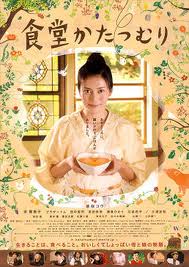
Avatar gave me some relief, Walt Disney meets Terminator is a jolly sort of jape but there is always something slightly suspicious about American films celebrating the triumph of indigenous culture in the face of corporate genocide! Thankfully the Japanese film Rinco's Restaurant was available and that provided the entertainment highlight of the bumpy ride across Siberia.


An American review says, "After a bad breakup, a young woman returns to her hometown and opens a menuless restaurant.". Well that provides you with a truly insightful sentence covering a really clever film about, as is a standard for Japanese cinema, the tensions and disfunctionality between generations. The further comment that the film is; "Quirky, Quiet, Kind of Interesting, A Little Slow" obviously took our critic into the area of aliteration... but only just!

Quirky: because there were no guns.
Quiet: because there were no guns.
Kind of Interesting: truly I have no idea what this means but suspect it is because there are no guns.
A Little Slow: required cognitive thought processes.

You may be detecting a slight anti-American stance in my writing and o.k., I will come clean, America is not my favourite country, some of American culture makes me feel like the planet Earth is quite rightly doomed and I find too many Americans.... (was going to add something else but on second thoughts that's about right).

Rinco's Restaurant is a beautiful film, very humourous, gentle and ultimately uplifting. The story, and I refuse to ruin it for you, provides the basics of Japanese culture; food and family. I absolutely loved it and have no idea how many dollars it made at the box office though I am almost certain that our American reviewer will be able to tell you.

"My name is not news!"

I cannot be the only person who is infuriated by the belief that dollar sales figures are the prime indicator of value in the culture of film. Fine if our American cousins (remember chimpanzees are also our cousins but prone to less violence) want to start every revue with the bottom line but why on earth do we feel the need to copy them? Over recent years our media has been so completely bastardized that whenever a serial sex pest appears on the front page of a newspaper the first thing we are told is the value of the house they live in. Arghhh.....

You may be wondering if you have stumbled across the right blog at this point. Wasn't this meant to be something about Japan and Japanese culture rather than the story of a hot seat in Heathrow and a diatribe against the U.S.A.? Well yes and no... you see the flight out to Tokyo is the start of what I call "The Purging". Having spent the last seven months in the evolving armageddon that is London culture whilst working on human rights issues (in other words looking daily at the most awful crimes against humanity perpetrated by truly dreadful examples of humanity) I tend to become, how shall I put this, a little negative. My time in Japan is always the bath tub of sanity for me but it takes a few days to relax into a society with so many fewer stabbings, manners and a sense that the future can be better than the past.


Consequently with each new trip the first entry on this blog tends also to give the reader the opportunity to carve their way through the mayhem and also arrive in Japan. Already in just the past few days I have seen enough to write a book about but the real reinforcement that I was in a completely different culture left a broad grin on my face. In the picture above you see the shopping arcade just opposite Mushashi Koyama station which is a two minute walk from where I live when in Tokyo.

This arcade is a long air conditioned tube, auxillary power supply always working, which tunnels for six or seven hundred meters away from the station. Every hundred metres the arcade is cross sectioned by side roads whose main physical feature is their narrowness. A car width with room for a pedestrian either side is about the space provided in these little veins of commerce.

I was strolling around the other morning and doing some serious people watching down in the arcade. It was very hot out, about 37 degrees with the sort of humidity that even slows down the pace of snails. Inside the arcade space the air conditioning keeps the jostling crowd relatively relaxed but as soon as you step into one of those side streets the air becomes so thick it is like trying to breath in treacle. The effort of breathing also immediately drenches you in sweat so all in all not an environment to consider running a marathon in.

As I sucked in another spoonful of breath a Tokyo Dust Cart came towards me. A note here, all the recycling vehicles are of a scale which allows them to pass through the famously narrow streets of Tokyo. They are quite dinky really! As the truckette passed me at a steady pace I was confronted by two men running down the street behind the vehicle loading the rubbish bins into its crushing mouth. The operative word here is "running".

Not only were these bin men running in urgency to gather the bins and fill the truck but they were doing so in corporation hard hats, uniform overalls, boots and the mandatory cotton gloves of all Japanese working people. I mean it, these guys were running and the rubbish truckette was rattling along at a fair pace.

The reason for this urgency was obvious, behind the dust cart was following a small line of traffic; two motor scooters, a delivery truckette and a car. In such narrow streets removing rubbish would inevitably cause delay and clearly the Japanese response is to do the job as quickly as possible so as to minimise the inconvenience.
After all, rubbish collection is a public service and therefore carries a responsibility to the public.

I stood watching and would have shaken my head in utter disbelief if it wasn't so bloody hot. You see I live most of my life in London and there the dust carts are bigger. If you drive along a back street and come across a dust cart you just pull up the handbrake and switch the engine off to save petrol money. Our dustmen are a lot more laid back, a lot more relaxed about their task. They will be careful not to breach any health and safety regulations by invoking unwarranted urgency.

But this is Japan and things are very different here. Now I have got the transfer process out of my system I will be sending some more detailed insights into those differences. Today promises to be a rich opportunity to relate. In a few hours I am off on the two and a half hour drive to visit my father-in-law's grave. This is for the occasion of the 23rd anniversary of his death, a very, very important moment in the death process which requires a priest and ceremony (with a not insubstantial fee involved) in order that father's transition into the fullness of re -birth is complete.

I have a sneaking feeling this will be the topic of my next entry; the business of death Japanese style.

Sunday, 3 January 2010

Mito Komon, Understanding who is boss and why.

I was just sitting around the house watching the television when I realised something about Japanese culture that I believe is actually very important. The programme on show was a typical holiday season drama; love, treachery, swords and samurai, everywhere samurai with swords. In fact I would imagine that for most people one of the first images the word Japan conjures up in their mind is that of the samurai.

Fine clothes, fine swords, the dangerous elegance of power

This icon of Japan is the foundation of television drama, the lynchpin format which places the history of Japan at the heart of entertainment. But the realisation I made was that with very small exceptions this is all there is, almost everything is samurai, almost everything is historical drama that proclaims one standard Japanese identity.

Every child knows who they are

Now this is so obvious that I am sure some of you are thinking, "Come on Jack, what are you trying to say here." Well it is obvious but it is so obvious that I feel we miss something. In our English culture we have historical drama, good lord we are riddled with it, the royal family through history, stories of the Englishman as empire builder, those Norman invaders, Robin Hood, the list is long. But in all of our dramas there are others, we always have others. Even when we deal with the royal family, an example being Queen Victoria, there is always the foreigner, Prince Albert, that German character. Robin Hood, well how many episodes before the skillful Moor makes an appearance? Besides the men in green of Sherwood forest are fighting that dreadful foreigner the Norman overlord.

We have always known who everyone else is

Our history is filled with the comings and goings not just of the continent of Europe but the whole world and they all turn up in the cast of our historical dramas. We source our identity in popular culture from this multiplicity of identities. In Japanese popular culture there is only one identity, all the time the same identity continually playing into the nation's consciousness.

Mito Komon, the definitive Japanese hierachy

We have to remember that for many years the traditional greeting for the tourist arriving on the shores of Japan was decapitation. The poor old sailor who managed to struggle through the surf as the sole survivor of a shipwreck would stagger half way up the beach but never make it any further. No words, no enquiry, no other consideration, the first person to see this demon from the sea would either take the head off there and then or get someone with a sword to do the job immediately. You see Japan is the sacred islands of the Japanese and in the past they intended to keep it that way. There was going to be no issue about foreigners coming and changing or ruining the Japanese way of life. Foreigners were simply not allowed to pollute the national identity.

But, as I have said before, pragmatism and a dislike of uncertainty were always on hand to deal with changing situations. Gunpowder, for the pragmatic mind, and European weapons, especially in a feudal society with clans protected by warrior armies, held a certain attraction. Even then the traders were kept in isolation from the nation of Japan, either on a designated island or in ghettos, contact with the foreign was limited. Once the technology and the skills of production were acquired then it was back to the good old days of banishing foreigners on pain of death.

Dark days ahead as America forges its diplomatic style

Things really do not change until July 14th 1853 when the United States of America decided to use their own interpretation of the word diplomacy to open up the country for trade. Commander Perry arrived in his famous Black Ship and gave Japan two options, either open for trade or have all your coastal towns bombarded. Faced with an opponent so technologically superior the decision was the pragmatic choice, open for trade. This ended 200 years of trading only with the Dutch and the Chinese. The nation still managed to protect its population from excessive foreign influence but it was recognised that Japan had to become an industrialised country and move on the global stage. The rest, as they say, is history!

That realisation I started with was the effect of a continually mono-cultural background on identity today. True, a lot of what I am saying here is actually quite superficial in some respects, but scratch any surface and you will find the true metal of your subject. I believe the metal of this Japanese identity is something special.

Two years ago a delegtaion of Islamic traders organising the sale of second hand Japanese cars from a port on the coast to Asia and beyond arranged to meet with the city mayor. Their petition was about trying to obtain halal meals for their children at the local school. They presented their case and the mayor, who listened patiently so the report stated, replied, "Ah yes, but this is Japan."

The delegation tried to further explain but anyone who knows the Japanese knows exactly what the mayor was saying. Perhaps I could translate for you, "If you want to eat halal please do but in Japan we are not muslim so we don't do halal in our schools. If you are not happy with this then please go to a country where your children can eat halal meals in their schools. Thankyou and goodbye."

Authority comes from the top

Perhaps this seems a glib interpretaton but to the Japanese mind the whole question would have made little sense and have been seen just as an odd request from a bunch of foreigners. There is only one cultural position and that is Japanese, all other relationships are a matter of pragmatism but Japanese culture is never negotiable.

Halal meals? I don't think so!

And so to Mito Komon. This is Japan's longest running television drama and I love every moment of it. This progamme has over 1000 episodes to its credit and began in 1969. At 16.00hrs most weekdays you can see an episode of the back catalogue and the current series plays in an evening slot within the schedule. 1000 episodes and all with exactly the same format, the same fundamental plot. This programme is the Doctor Who of Japanese television, by that I mean that every so often the main character, Mitsuemon, regenerates and so, I believe, there have been 5 Mitsuemon and with each new interpretation of the character his travelling companions change (slightly).

Outnumbered but never outmatched, Japan against the world.

This is the plot: wandering old retired man arrives at a location and finds something bad going on. He and his team investigate and discover the truth about how local people are being abused by corrupt officials and authorities. They then confront the evil doers and a fight ensues. This fight is badly ill matched with Mitsuemon's faithful and ever present key retainers Kaku-san and Suke-san usually taking on at least 15 opponents at any one time. However what the bad guys do not know is that these two men represent the most formidable of swordmen and the most formidable exponent of judo. Very quickly it is clear that no numbers of opponent will get the better of these two but that is just the first lesson.

The inro is produced

At some point Mitsuemon will call his men to him and then they will reveal that their master is in fact not a retired travelling crepe merchant but the second most powerful person in Japan, Tokugowa Mitsukuni, former vice-Shogun and reitired daimyo of the Mito domain. No matter what your rank or authority this is the moment when you get down on your knees because if Mitsuemon tells you to eat your own foot all you can do is ask permission for some salt.
Pass the salt

Here is a video clip so you can see for yourself:


So there you have it, out comes the inro (the lacquered box bearing the symbol of the Tokugowa clan) and everyone thinks "Shit!" as Suke-san tells them "Do you know who this is, this is the former vice-shogun, this is the Lord of Mito, get down on your knees now and show the proper respect."


There is no chance or opportunity of any other action in this moment as everyone is faced with the power of Japanese feudal authority. What Mitsuemon says is exactly what will happen, there is no debate. Faced with such power the ring leader gets up and attacks, he knows that he is a dead man and so decides to go out fighting, it is all he can do. But for such unusual insolence even in his moment of death a judicious foot comes down on his neck. Most of the time the ring leaders just keep their noses in the dirt and take their punishment. The other bad boy is then dispatched with ruthless efficiency and all has been set right. Mitsuemon produces his trademark laugh, probably at the very idea anyone thought they could get away with such a scam in the first place, and then goes on to ensure all worthy citizens are safe within that local society.

Everyone on the floor before authority

Well yes, this is an historic drama played with humour and perhaps you would say hardly a touchstone of culture. I would contend that you would be wrong to look at this with such eyes. Those eyes would be your western interpretation. The fundamental of this drama is authority and its power. When that inro comes out everything stops, one look at the Tokugawa seal and everyone falls to their knees. Remember this is Japan's longest running drama celebrating its 40th anniversary this year. We have Coronation Street and the working class of the Rover's Return but Japan has supreme power and authority enforced from the top to ensure society functions as it should with all wrong doers punished mercilessly. Every day at 16.00hrs and once a week in an evening prime time slot, the message goes out, always the same story, always the same result, always consistent. No uncertainty at all.

And who was this Mitsuemon?

Tokugawa Mitsukuni (徳川 光圀, Tokugawa Mitsukuni?, July 11, 1628 - January 14, 1701) was a prominent daimyo who was known for his influence in the politics of the early Edo period. He was the third son of Tokugawa Yorifusa (who in turn was the eighth son of Tokugawa Ieyasu) and succeeded him, becoming the second daimyo of the Mito domain.
source: Wikipedia

Tokugawa Ieyasu

The key name in this extract is Tokugawa Ieyasu who is a formidable figure in Japanese history. This is the man who founded the Tokugawa Shogunate which ruled Japan for 250 years, absolutely no mean feat whatsoever. So Mitsuemon is Tougawa Ieyasu's grandson and a former vice-shogun in the Tokugowo Shogunate and that is someone you just do not want to pick a fight with.

This Tokugawa clan is very important because it established the capital of Japan at Edo, this today is the location of Tokyo. No Tokugawa, no Tokyo, as simple as that.

So how does this all translate into the contemporary. Well it is about authority and how we react to it. One flash of the inro and everyone is on their knees. But if you ask a company man today if that effects his life he would probably not understand what you mean, no Mitsuemon is just a television drama. However, if you ask that company man out for a beer after work he may just say to you that he can't make it because his boss is working late that evening. Nobody leaves until after the boss has gone, that's just the way it is in Japan.
In the meantime if any of you want to buy gold or silver rather than leave your money in collapsing currencies and negative interest rate bank accounts then here is where you do it: Saving in Gold Alternatively  you could simply believe what the politicians, bankers and economists are telling you, after all we all have to believe in something!
The man who replaced Liberal Democratic Party of Japan
Well Done Indeed Sir!
Overwhelming Election Victory on Change Mandate
Consequence: nothing changes.
Hatoyama, the grandson of the founder of a political dynasty

Hatoyama comes from a prominent Japanese political family which has been called the "Kennedy family of Japan."[2]

Hatoyama, who was born in Bunkyō, Tokyo, is a fourth generation politician. His paternal great-grandfather, Kazuo Hatoyama, was speaker of the House of Representatives of the Diet of Japan from 1896 to 1897 during the Meiji era.[3] Kazuo later served as the president of Waseda University.[3] His paternal great-grandmother, Haruko Hatoyama, was a co-founder of what is known today as Kyoritsu Women's University. His paternal grandfather, Ichirō Hatoyama, was a major politician; he served as Prime Minister and was a founder and the first President of the Liberal Democratic Party (ja:自由民主党総裁, Jiyū-Minshutō Sōsai?, 1956).

extract source: http://en.wikipedia.org/wiki/Yukio_Hatoyama

Mitsuemon source: http://en.wikipedia.org/wiki/Mito_K%C5%8Dmon